
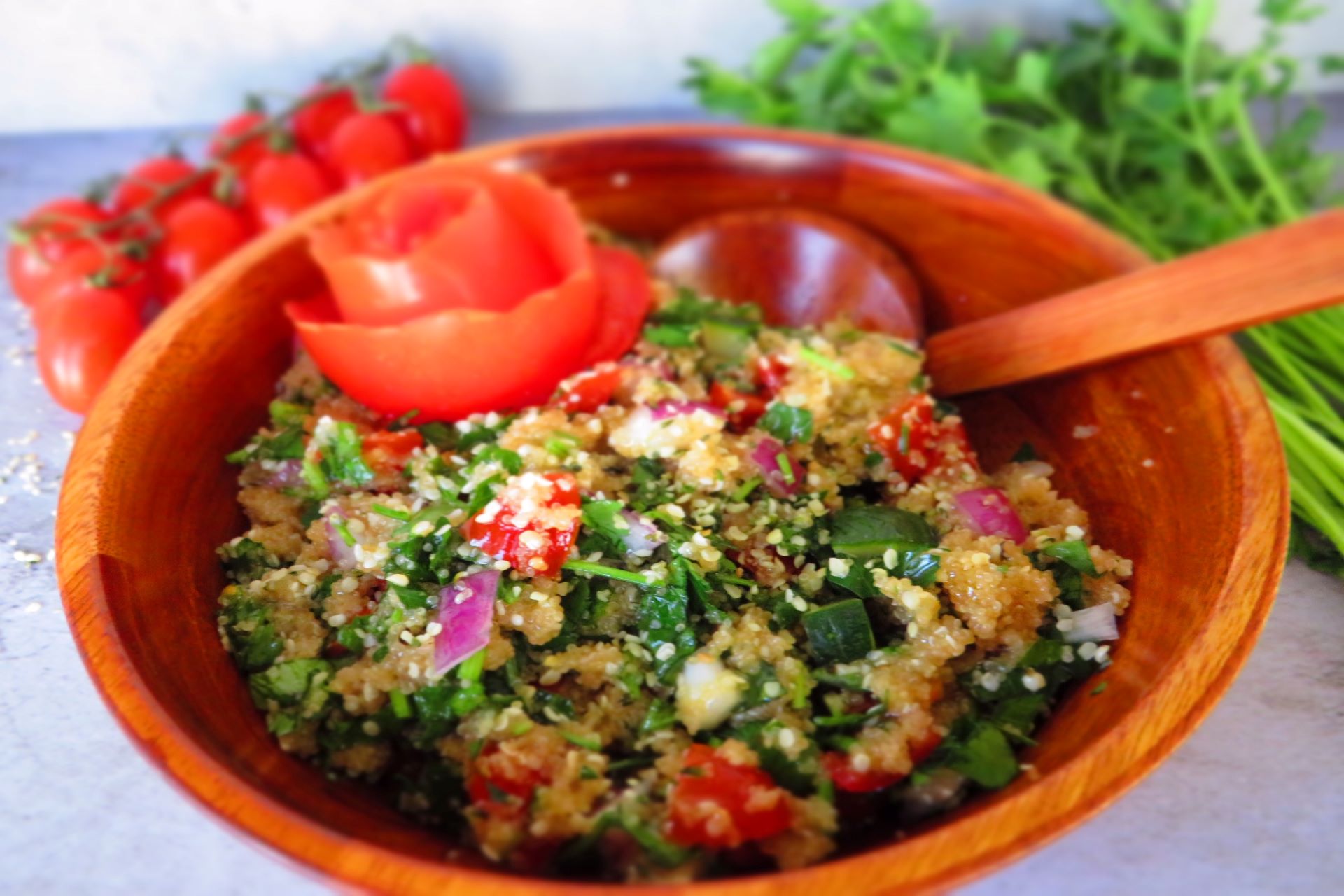
Tabbouleh is a traditional salad native to the Levant, making this salad and its variations common all the way from Armenia and Turkey through the Levant and into Jordan and Israel. Tabbouleh is believed to have come from the Arabic word ‘taabil’ which means to season or spice. And it is certainly that. Not only is it fresh and bright, but it also has an aroma that conjures up images of blue skies and cool breezy mountain meadows.
The Lebanese version, that inspired me is made with bulgur, onions, tomatoes, parsley, olive oil, and lemon as the main ingredients. I tasted tabbouleh a few years ago, and I instantly fell in love with it. It served as a light, refreshing counterpoint to the heavier proteins that constituted the entrée.
While it is traditionally served with bulgur, I have experimented with freekeh and quinoa, as well as adding chopped green olives. Since I grow amaranth at home for its green leaves, I wanted to use its seeds for this salad. Amaranth seeds have an unusual texture and flavor profile. It adds a little bit of mystery to tabbouleh and also additional health benefits. I enjoy a mystery when comes to new flavors and textures, so this salad fit the part well. Tabbouleh is a simple salad that utilizes fresh and crisp ingredients that will remind of you of a cool, sharp, citrusy salad on a warm summers’ day.
Tabbouleh with Amaranth
Equipment
- Salad bowl
Ingredients
- ½ cup amaranth to get one cup cooked
- 1 red onion diced
- 6 cherry tomatoes diced
- 1 bunch parsley
- 2 sprigs mint leaves julienne cut
- 1 tbsp lemon juice freshly squeezed
- pink salt to taste
- ½ tsp za'atar spice mixture optional
- 1 tbsp extra virgin olive oil
- 2 tbsp hemp seeds
- 1 cucumber diced with skin
- 1 tbsp olives cocktail
Instructions
- Boil the amaranth with water for 13- 15 minutes and cool it.
- Mix all the ingredients in a salad bowl and refrigerate for an hour in covered bowl.
Notes

- Boil ½ cup of amaranth in 1 ½ cups of water for 13-15 minutes until all the water has evaporated. There is no need to soak the amaranth prior to cooking it.
- Substitute amaranth with bulgur or freekeh.
- Mint leaves add an extra touch of flavor to the salad but not an absolute requirement.
- If you cannot find za'atar spice mixture, you can substitute toasted white sesame seeds and fresh thyme.
- How would you eat Tabbouleh with? Tabbouleh is eaten with falafel, hummus or pita bread.
- Is Tabbouleh vegan? It is vegan.
- What are the other substitutions for amaranth? Bulgur or quinoa will work well.
Nutrition








0 Comments